Do you really need travel insurance?
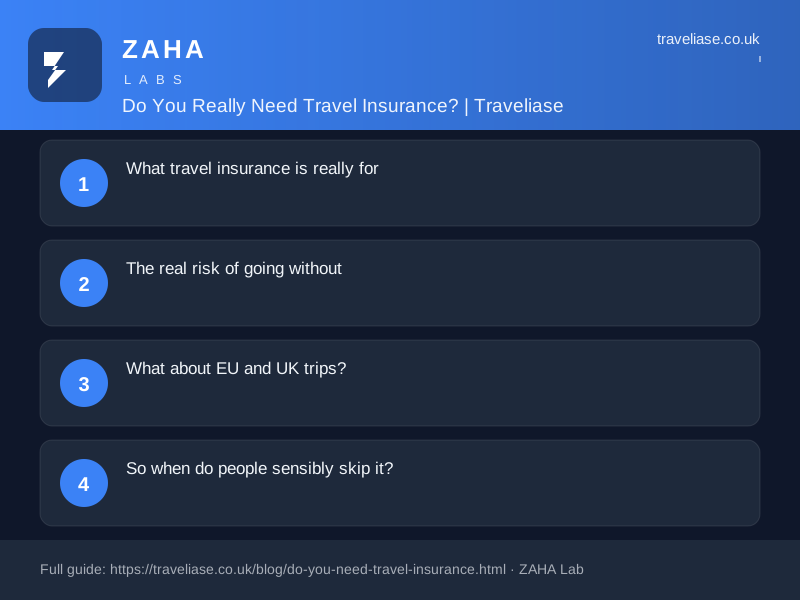
It's the line item people are tempted to cross off a trip budget: the flights are booked, the hotel's paid for, and travel insurance feels like an optional extra. But of everything you spend on a trip, it may be the one purchase that exists purely to stop a bad day becoming a financial disaster. So, do you actually need it?
What travel insurance is really for
It helps to remember what insurance is: a way of swapping a small, certain cost (the premium) for protection against a large, uncertain one. With travel, those uncertain costs can be surprisingly big. A good policy is built around a few core protections:
- Emergency medical care and getting you home. Falling ill or being injured abroad can be eye-wateringly expensive to treat, and bringing someone home safely can cost more still. This is the part that matters most.
- Cancellation and cutting a trip short. If you have to cancel before you go, or come home early, for a covered reason, you can claim back money you'd otherwise lose.
- Lost, stolen or damaged belongings. Luggage and possessions, within set limits.
- Personal liability. If you accidentally hurt someone or damage their property.
- A 24-hour helpline. Someone to call when things go wrong far from home.
For a fuller breakdown, our guide to what travel insurance covers walks through each part in plain English.
The real risk of going without
The honest answer to "do I need it?" is that you're betting on nothing going wrong. Most of the time, nothing does, and that's exactly why it's tempting to skip. The problem is the rare trip where something does happen: an accident on day two, a stomach bug that turns into a hospital stay, a relative falling ill at home so you cut the holiday short. Without cover, those costs land entirely on you, and they can dwarf the price of the trip itself. Insurance exists for precisely the day you hoped wouldn't come.
There's a behavioural trap here too. Because the downside is invisible until it happens, our brains discount it. The premium feels real and the risk feels theoretical, right up until it isn't.
What about EU and UK trips?
People often assume short hops within Europe don't need cover, especially if they hold a Global Health Insurance Card (GHIC). The GHIC is genuinely useful, but it isn't travel insurance: it can help with some state healthcare in participating countries, yet it won't bring you home, cover a cancelled trip, or replace stolen belongings. It's a complement to insurance, not a substitute.
And UK trips? Cancellation cover, lost-deposit protection and your belongings can all still matter on a domestic break, though the medical side is naturally less of a concern at home. The right answer depends on your trip, which is the whole point of checking rather than guessing.
So when do people sensibly skip it?
Rarely is the honest answer, but there are edge cases, a fully refundable day trip with nothing booked and nothing to lose, for instance. Even then, the medical and liability protection is doing quiet work. For almost any trip with money on the line or a flight involved, cover is worth having. The smarter question isn't usually "should I have insurance?" but "what cover does this trip need, and where are the gaps?"
Not sure what your trip needs? Run it through the cover checker for a tailored list of what to look for before you compare policies.
Buy as soon as you book, not on departure day, that way your cancellation cover is working from the moment your money is at risk. And whatever you choose, read the wording so you know what's in and what's out before you travel.